Soci–229
THE SOCIOLOGY OF EXCLUSIONARY POLITICS AND THE ASCENDANT FAR RIGHT

Course Description
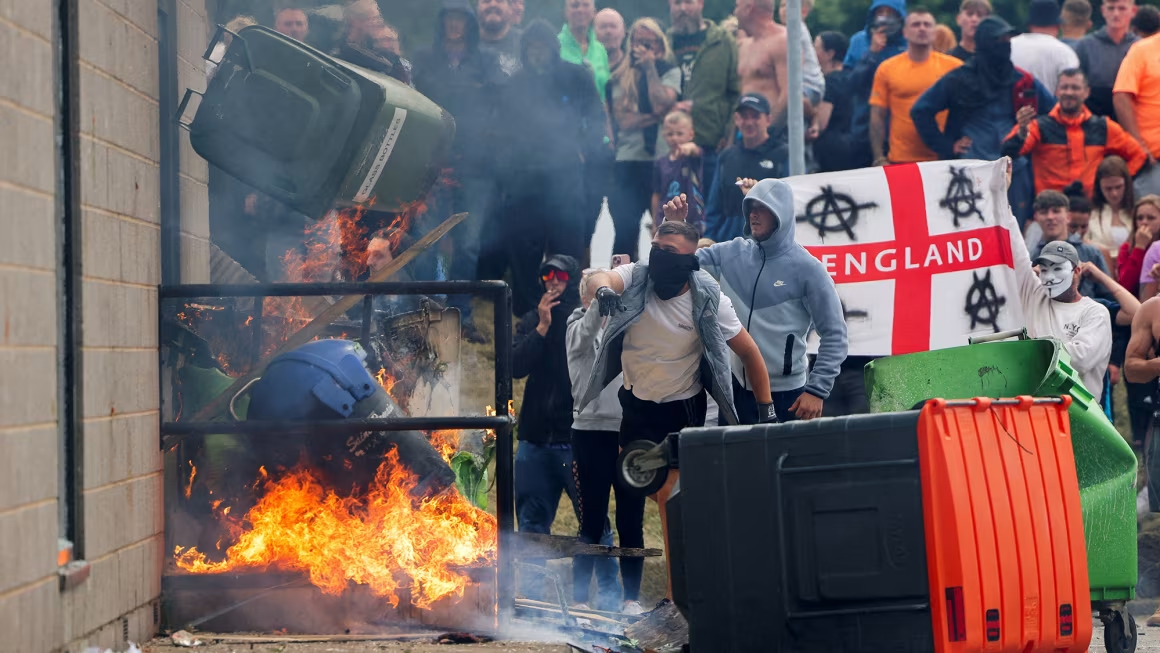
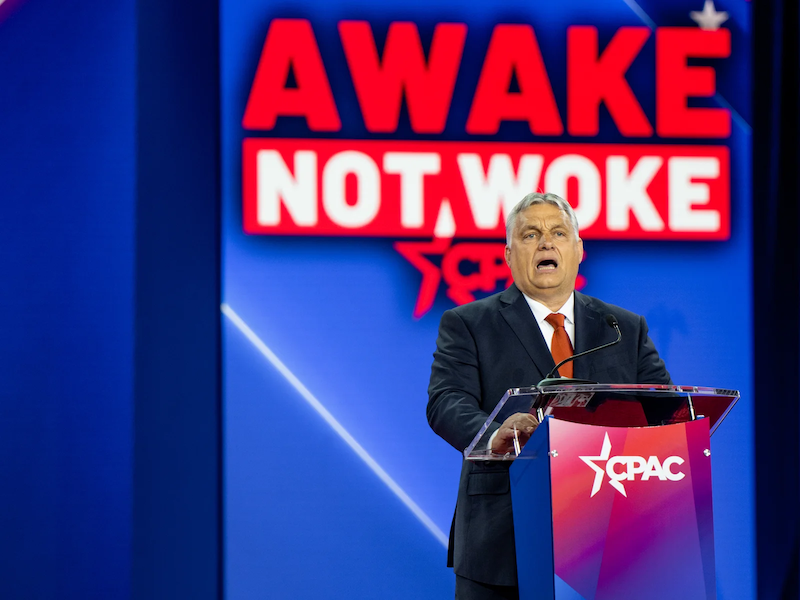
The early 21st century has been marked by the convergence of populism, ethno-nationalism, and authoritarianism in all corners of the world. Exclusionary movements have emerged to challenge cultural and intellectual currents in world society that were, at one point, viewed as inevitable agents of progress that would usher in a world liberated from the divisive and demagogic forces that produced immense human suffering and countless theaters of war in the 20th century. Today, the pendulum appears to be swinging back in the other direction. The far right represents the fastest growing party family in Europe and is translating mass disaffection and cultural anxieties around immigration into electoral victories and political power. Narratives of national decline and revival are giving new life to restrictive strains of nationalism in India and the United States, the two largest democracies in the world. Elsewhere, exclusionary political movements in Latin America, the Middle East and beyond are threatening the democratic norms and institutions that sustained the world system in the postwar period. To make sense of these developments, this course will critically examine the rise of right-wing radicalism in the US, the European far right, and other exclusionary movements around the world by marshaling theoretical insights and empirical evidence from political sociology, cultural sociology, and the broader study of comparative politics.
Structure
Design of Synchronous Class Sessions
Most classes will follow a simple structure. I will begin with a lecture that goes through some of our assigned readings and summarizes conversations from our online discussion board (more on that later).1 Then, I will toss the baton over to all of you. You will get into small groups (comprised of 3 to 4 students) and provide answers to the prompts highlighted in the screen before you. These group discussions will only last about 20-30 minutes, but they are vital—i.e., they will set the stage for our plenary discussions and serve as a key indicator of your participation grade for the course. To end each synchronous session, we will get together as a broader collective and discuss the themes that emerged during group discussions.
Distribution of Topics & Readings
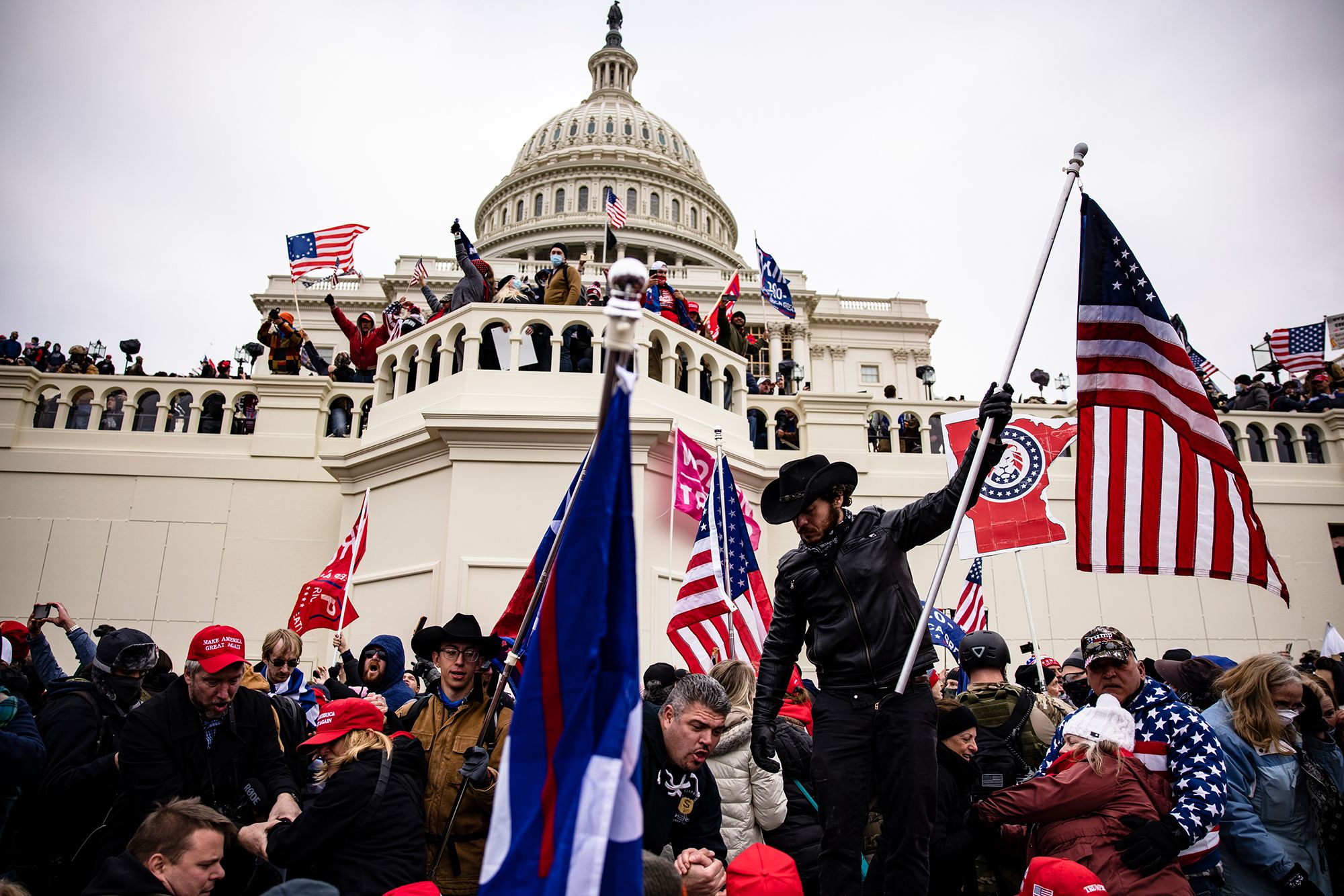
This course is meant to be a slow burn. We will not discuss contemporary political movements in detail (e.g., the rising tide of the far right in Europe) until we have critically wrestled with the “basics.” With this in mind, Part I will introduce you to some of building blocks of exclusionary politics in the modern world, including—but not limited to—populism, ethno-nationalism, authoritarianism, and fascism. Next, Part II will delve into exclusionary politics in the contemporary United States. Specifically, we will adjudicate American-styled debates about political polarization, “wokeness,” and the putative culture war, with an eye to how higher education serves as a vehicle for cultural fragmentation and theater for moralized partisan conflict. Part II will also reckon with Trumpism, a phenomenon that is, at once, characteristically American in its inheritance of tropes, frames and motifs that have long lingered in the social and cultural underbelly of American society, but also serves as a reflection of illiberal currents that have swept countries around the world. To drive this point home, Part III shifts analytic focus to political developments outside the US—from the rise of the Alternative für Deutschland in Germany to Erdoğan’s pursuit of neo-Ottomanism in Turkey, the illiberal machinations of the Bharatiya Janata Party in India, and the steady radicalization of Likud in Israel. With a deeper understanding of the transnational character of exclusionary politics, students will produce a term paper that sheds light on the politics of exclusion at any intersection of space and time. Presentations related to these papers will define Part IV of the class and augur the end of the fall semester.
Readings
All course readings are available via the mystifying power of Moodle. As you plan for the semester, it may be useful to bookmark the eReserves page on our course website. New readings may be introduced as the world around us evolves, whether via the incremental march of science or in response to social, economic and political shocks that warrant further reflection and empirical scrutiny.
Evaluations
A Bird’s Eye View
| Task | Description | Weight | Deadline or Evaluative Time Horizon |
|---|---|---|---|
| Response Memos | On a weekly basis, students will engage with—and respond to—questions posed on our Moodle Discussion Board. Responses must be between 250–400 words, or a penalty will be applied. | 10% | 8:00 PM on Mondays. Evaluated from Week 3 onwards. |
| Participation | Students must actively participate in class discussions by raising their hand to share their thoughts or by meaningfully contributing to small group conversations. | 10% | Evaluated during class sessions throughout the term. |
| Midterm Paper | Students may work individually or in groups of two to submit a short paper (8-10 double-spaced pages, 12-point font) summarizing at least one major topic from Part I of the course. To earn an A, the paper should analyze at least two major topics and explore their connections. Students choosing to work in groups must meet with me—both before and after the due date—to discuss how the work will be or has been divided. Other expectations can be found here. | 30% | Wednesday, October 29th at 8:00 PM. |
| Final Paper Proposal | Students are required to submit a term paper on a topic of their choice, subject to my approval as the course instructor. Students must meet with me during office hours to discuss their initial ideas for the paper. All papers must be related to the politics of exclusion as conceptualized in this class. To finalize the approval process, students must submit a brief (1–2 page) proposal that outlines their selected topic, explains its relevance to the course, and highlights the main arguments they intend to advance. | 5% | Friday, November 21st at 8:00 PM. |
| Final Paper Presentation | Students will deliver a 5–8-minute presentation based on, or informed by, their term paper. Guidelines detailing my basic expectations can be accessed here. | 10% | During Part IV of our class. |
| Final Paper | As noted, the term paper must focus on a topic related to exclusionary politics and must be approved by me, the course instructor. Papers should be 10–15 pages long, double-spaced, and written in 12-point font. Other expectations can be found here. | 35% | Wednesday, December 17th at 8:00 PM. |
Guidelines for key deliverables will be gradually rolled out (or uploaded online) as deadlines come into focus.
Guidelines for Midterm Paper
You can access guidelines for the midterm paper by clicking here or hitting the button below.
Instructions (Click to Expand/Close)
Guidelines for Final Paper Proposal
You can access guidelines for the final paper proposal by clicking here or hitting the button below.
Instructions (Click to Expand/Close)
Guidelines for Final Presentation and Term Paper
You can access guidelines for your final evaluations by clicking here or hitting the button below.
Instructions (Click to Expand/Close)
Norms, Rules & Regulations
Please review the Amherst College Honor Code, which can be accessed in its entirety here.
Violations of the Honor Code will be promptly reported to the Dean of Students. As Section 1.1 of the Honor Code indicates, plagiarism is a serious offense. In most cases, students who plagiarize the work of others will fail this class and may face additional disciplinary penalties. Moreover, as detailed in Sections 1.2 to 1.4 of the Honor Code, students must respect others in the classroom, including those whose views deviate from their own. Failure to do so will prompt disciplinary action.
There is no reason to pretend like generative artificial intelligence (GAI) does not exist in the world out there. These systems have arrived, and they may revolutionize how higher education “works.” With this in mind, you are free to use ChatGPT and its analogues for class assignments—but you have to cite the GAI you are using. Failure to do so amounts to plagiarism.
To reiterate:
If you use a GAI tool (like ChatGPT) and do not cite it, it is a form of plagiarism.
You are expected to attend each and every class. If you do not, you will lose points for participation. That said, I am aware that you are all human beings whose lives are often fraught with uncertainty. If something comes up, please let me know and I will do my best to be as accommodating as possible. Extended absences may, however, require additional documentation (e.g., note from a physician).
Provisionally, I have decided to allow students to use laptops and tablets in class. This is, however, highly conditional. If I observe students using their electronic devices for non-academic pursuits (e.g., shopping, consuming social media and so on), I will institute a sweeping ban on electronics.
Do not be the one to contravene our social contract.
On weekdays and non-holidays, I will respond to e-mails within two days. If I fail to meet this standard, please send me a follow-up message with a gentle reminder. On weekends2 and breaks, I will not respond to e-mails unless you have an emergency. If you do, please remember to include EMERGENCY in the subject line.
Assignments must be submitted on time. A late submission will result in a penalty of 5% for each day beyond the deadline.3 However, as noted, I am well aware that life can present unexpected challenges. If you anticipate missing a deadline or have an emergency, please let me know soon as you can. Extensions may be granted on a case-by-case basis.
A Note On Office Hours
I will hold my in-person office hours on Fridays from 9:00 AM to 11:00 AM in Morgan Hall (Room 306), although students can also schedule meetings during an Open Meeting Slot.4 All meetings—even during office hours—must be scheduled in advance through Google Calendar. To reiterate:
All meetings, even during office hours, must be scheduled in advance via Google Calendar.
Need Directions? (Click to Expand and/or Close)
Accessibility and Accommodations
If you require accommodations, please contact Student Accessibility Services as soon as possible and submit an application through the AIM Portal. More generally, if you have any suggestions about how this class can be more accessible and inclusive, please let me know via e-mail or during office hours.
Weekly Schedule
As noted, all readings can be accessed via the eReserves page on our course website.
Readings underlined below are recommended but optional.
Part I: Theoretical Foundations
Week 1: The Politics of Exclusion
September 3rd
The Far Right Today (Mudde 2019)
- Introduction
- Chapter 1
- Chapter 2
Week 2: Populism
September 8th & September 10th
Populism: A Very Short Introduction (Mudde and Rovira Kaltwasser 2017)
- Chapter 1
- Chapter 2
The Populist Zeitgeist (Mudde 2004)
Trust the People! Populism and the Two Faces of Democracy (Canovan 1999)
When the Whole Is Greater than the Sum of Its Parts: On the Conceptualization and Measurement of Populist Attitudes and Other Multidimensional Constructs (Wuttke, Schimpf, and Schoen 2020)
Week 3: Nationalism
September 15th & September 17th
Nationalism Reframed: Nationhood and the National Question in the New Europe (Brubaker 1996)
- Chapter 1
Nationalism in Settled Times (Bonikowski 2016)
How Legacies of Geopolitical Trauma Shape Popular Nationalism Today (Soehl and Karim 2021)
The Partisan Sorting of “America”: How Nationalist Cleavages Shaped the 2016 U.S. Presidential Election (Bonikowski, Feinstein, and Bock 2021)
Week 5: Fascism
September 29th & October 1st
What Makes Fascism Fascist? (Ganz 2022)
Fascists (Mann 2004)
- Chapter 1
How Fascism Works: The Politics of Us and Them (Stanley 2018)
- Chapter 1
Fascism and Populism: Are They Useful Categories for Comparative Sociological Analysis? (Berezin 2019)
Week 6: The Politics of Gender and Sexuality
October 6th & October 8th
Why Is the Idea of ‘Gender’ Provoking Backlash the World Over? (Butler 2021)
Is Democracy Bad for LGBT+ Rights? (Velasco, Baral, and Tang 2024)
Who’s Afraid of Gender? (Butler 2024)
- Chapter 1
Gender Identity: The Career of a Category (Brubaker 2025)
Transnational Backlash and the Deinstitutionalization of Liberal Norms: LGBT+ Rights in a Contested World (Velasco 2023)
Week 7: Boundaries
October 15th
Contraction as a Response to Group Threat: Demographic Decline and Whites’ Classification of People Who Are Ambiguously White (Abascal 2020)
Politics of Boundary Consolidation: Income Inequality, Ethnonationalism, and Radical-Right Voting (Lukk 2024)
Us and Them: Black-White Relations in the Wake of Hispanic Population Growth (Abascal 2015)
Part II: Exclusionary Politics in America
Week 8: Meditations on Trumpism
October 20th & October 22nd
The Far Right in America (Mudde 2018)
- Chapter 9
- Chapter 11
- Chapter 13
- Chapter 26
Strangers in Their Own Land (Hochschild 2016)
- Chapter 15
White Identity Politics (Jardina 2019)
- Chapter 1
Activating Animus: The Uniquely Social Roots of Trump Support (Mason, Wronski, and Kane 2021)
The Authentic Appeal of the Lying Demagogue: Proclaiming the Deeper Truth about Political Illegitimacy
(Hahl, Kim, and Zuckerman Sivan 2018)
Racism in Trump’s America: Reflections on Culture, Sociology, and the 2016 Us Presidential Election (Bobo 2017)
Politics as Usual? Measuring Populism, Nationalism, and Authoritarianism in U.S. Presidential Campaigns (1952–2020) with Neural Language Models (Bonikowski, Luo, and Stuhler 2022)
Misogynistic Men Online: How the Red Pill Helped Elect Trump (Dignam and Rohlinger 2019)
Donald J. Trump and the Rhetoric of Ressentiment (Kelly 2020)
Make America Christian Again: Christian Nationalism and Voting for Donald Trump in the 2016 Presidential Election (Whitehead, Perry, and Baker 2018)
Week 9: Political Polarization, Educational Polarization and the “Culture War”
October 27th & October 29th
The Origins and Consequences of Affective Polarization in the United States (Iyengar et al. 2019)
Pluralistic Collapse: The “Oil Spill” Model of Mass Opinion Polarization (DellaPosta 2020)
What Do We Mean When We Say “Culture War?” (Nwanevu 2022)
Was There a Culture War? Partisan Polarization and Secular Trends in US Public Opinion
(Baldassarri and Park 2020)
College and the “Culture War”: Assessing Higher Education’s Influence on Moral Attitudes
(Broćić and Miles 2021)
Polarized by Degrees: How the Diploma Divide and the Culture War Transformed American Politics
(Grossmann and Hopkins 2024)
- Chapter 1
Becoming an Ideologue: Social Sorting and the Microfoundations of Polarization (Rawlings 2022)
The Polarization of Popular Culture: Tracing the Size, Shape, and Depth of the “Oil Spill”
(Rawlings and Childress 2024)
Heterogeneity and Convergence in Cultural Logics of Americanness (Okura and Karim 2025)
Enter Gouldner: The New Class Project in the Trumpian Vortex (Manza 2025)
Your midterm papers are due by 8:00 PM on Wednesday, October 29th.
Week 10: “Wokeness” and its Discontents
November 3rd & November 5th
We Have Never Been Woke: The Cultural Contradictions of a New Elite (al-Gharbi 2024)
- Chapter 1
- Chapter 2
A History of “Wokeness” (Romano 2020)
Wokeness: A Retrospective (Bright 2025)
The Emerging Bipartisan Wokeness (Harper 2024)
Part III: Moving Beyond the United States
Week 11: Europe’s Far Right
November 10th & November 12th
Far Right Parties in Europe (Golder 2016)
Populist Radical Right Parties in Europe (Mudde 2007)
- Chapter 1
The Sociology of the Radical Right (Rydgren 2007)
The Supply Side: Mainstream Right Party Policy Positions in a Changing Political Space in Western Europe
(Abou-Chadi and Krause 2021)
The Normalization of the Radical Right: A Norms Theory of Political Supply and Demand (Valentim 2024)
- Chapter 8
Horror Vacui: Racial Misalignment, Symbolic Repair, and Imperial Legitimation in German National Socialist Portrait Photography (Skarpelis 2023)
Week 12: India, Brazil, Turkey, Israel
November 17th & November 19th
Hindu Nationalism and the New Jim Crow (Varshney and Staggs 2024)
Demographic Polarization and the Rise of the Far Right: Brazil’s 2018 Presidential Election (Layton et al. 2021)
Turkey at the Crossroads? (Tuğal 2021)
Why Israeli Democracy Is in Crisis (Gidron 2023)
Your final paper proposals are due by 8:00 PM on Friday, November 21st.
Week 13: Thanksgiving Break
Part IV: Final Presentations
Week 14: First Week of Presentations
December 1st & December 3rd
Week 15: Second Week of Presentations
December 8th & December 10th
Your term papers are due by 8:00 PM on Wednesday, December 17th.
Should be available within 24 hours of a class session.
Part I: Theoretical Foundations
Week 1
Week 2
Week 3
Week 4
Week 5
Week 6
Week 7
Part II: Exclusionary Politics in America
Week 8
Week 9
Political Polarization, Educational Polarization and the “Culture War”
Week 10
Part III: Moving Beyond the United States
Week 11
Week 12
Recommended Readings
Just to drive the point home: underlined readings are recommended but optional.